
Young Guns 2026: Earning It the Hard Way
A New Generation of Iron Dog Racers Learns the Trail, Mile by Mile
For many young racers, the Iron Dog doesn’t begin at the starting line in Big Lake, it starts years earlier, standing quietly at a checkpoint, watching headlights glow through the dark, listening to engines idle in the cold, and imagining what it might feel like to be part of the World’s Longest, Toughest Snowmobile Race.
That sense of curiosity and pull is shared across the 13 racers under the age of 30 entered in the 2026 Iron Dog. Some are true rookies, others already veterans despite their age, but all arrive with deep ties to snowmachining, Alaska communities, and the culture that surrounds the race.
Steffen Booth, 20, knows that feeling well. Born and raised in Nome, he grew up surrounded by Iron Dog history and the legends who helped define it.
“The racing history with all the ‘legends’ involved in Nome and the surrounding region for sure has a big part of shaping the racer I strive to be,” Booth said. “The thought that I can inspire the youth just like many racers did when I was younger definitely gets me excited for the race.”
For Booth, the excitement also comes from what he doesn’t yet know.
“I look forward to getting through all the learning process successfully throughout the race,” he said. “The more we know, the better we get.”
Like many young racers, Booth is realistic about his goals.
“To finish would be an accomplishment,” he said. “A goal to set to do better for the next year.”
That mindset, learning first, results second, echoes throughout the field.
Evan Barber, 21, is already a veteran by Iron Dog standards, having raced four times since first entering the Pro Class at age 16. Raised in Willow, Barber grew up riding straight from his backyard and dreaming about racing long before he ever lined up at the start.
“Almost everything that hints at snow or machines gets me excited about Iron Dog,” Barber said. “Seeing parts start to come in, sleds coming through checkpoints, cold temps, snow coming down, it all gets me excited.”
Barber knows the race well enough now to understand where mistakes happen.
“For me, the first day and a half is the most important part of the race,” he said. “That’s where the most risk of failure is, anywhere conditions are unpredictable.”
Despite his speed and success, including two top-five finishes, Barber says experience has taught him to manage the mental side of the race.
“One of the biggest lessons I’ve learned is just to stay vigilant and embrace the suck,” he said. “When the trail or weather sucks, it sucks for everyone. You have to use that to your advantage mentally.”
Bradley Kishbaugh, 27, is entering his fifth Iron Dog, but like Barber, he says the race never stops teaching you lessons. Raised in Soldotna, Kishbaugh grew up riding off-trail and in backcountry terrain with his dad before branching out across Turnagain Pass and beyond.
“The main thing that gets me excited is the challenges we may have to overcome,” Kishbaugh said. “[It is] problem solving and pushing myself out of my comfort zone.”
For Kishbaugh, the first day remains critical.
“The South Fork and Farewell Burn always seem to be a challenge,” he said. “It’s so important to make it to McGrath with machines in one piece.”
“This will be my fifth Iron Dog,” he added. “You never stop learning. Some challenges are preventable, some are in God’s hands. The biggest thing is to take care of yourself and your partner. Negativity will kill your race.”
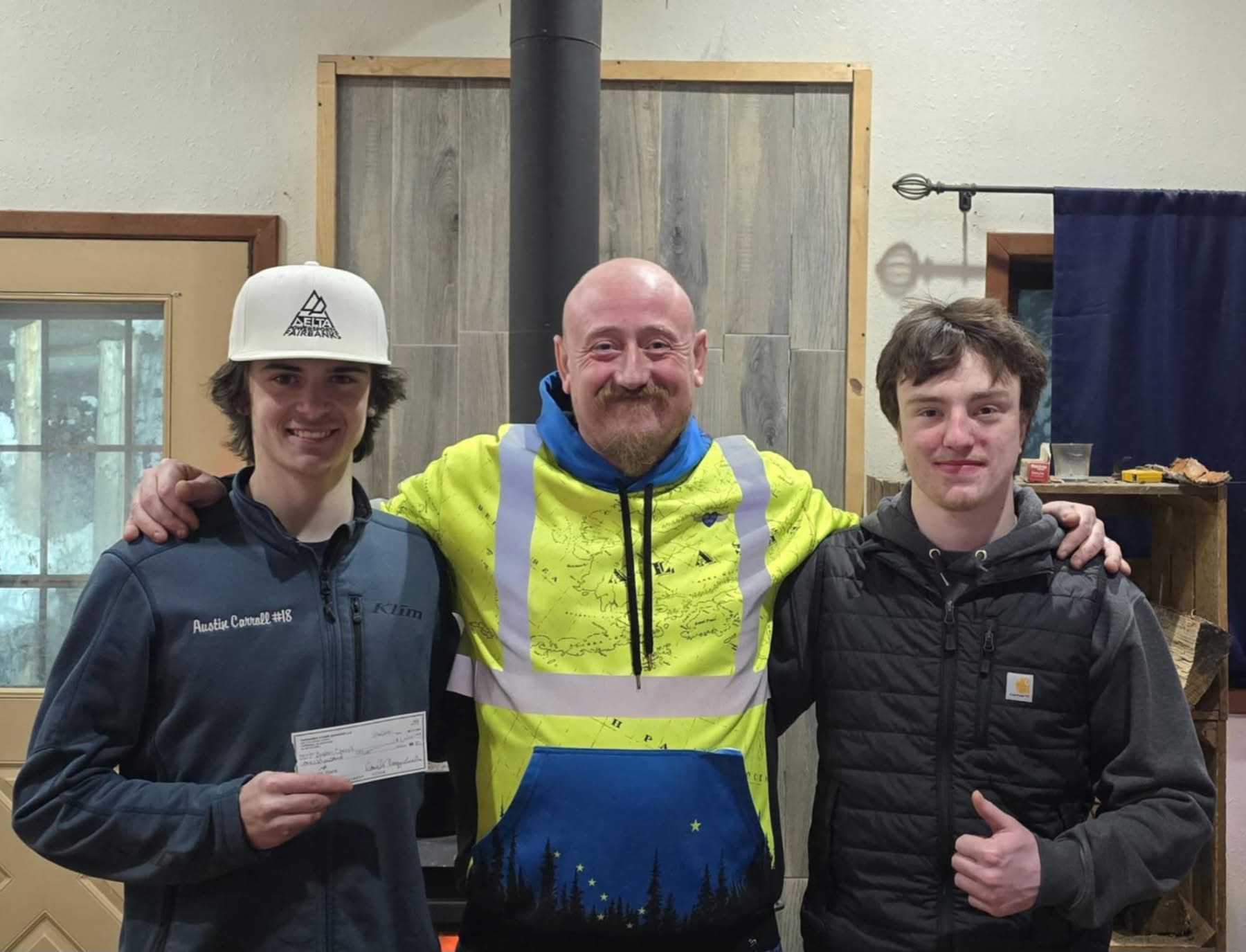
Austin Carroll, Buck Roggenbuck and Corbin Hollenbeck
At just 19, Austin Carroll already has multiple Iron Dog finishes to his name. Growing up in Fairbanks, Carroll was surrounded by racing and snowmachines from the start.
“I get excited for all of the experience and meeting more of the faster racers along the race,” Carroll said. “And just the fun you have at each checkpoint.”
This year, Carroll is focused on improving through known trouble spots.
“I’m most focused on getting through the Burn faster than last year,” he said. “That affected our positions a lot.”
[Editor Note: The Burn is in between Tatina and Nikolai Checkpoints]
His goals remain grounded.
“A good race would be a top seven,” he said. “If we do better, that’s awesome.”
Corbin Hollenbeck, 19, is a rookie from North Pole whose excitement comes from the simplicity of riding with friends.
“What gets me most excited is just being able to ride my snowmachine with my buddy and go have fun,” he said.
Raised riding everything from trails to mountains, Hollenbeck says his focus is straightforward.
“A good race would be running clean, keeping sleds in one piece, minimizing wrench time, staying smooth but fast,” he said.
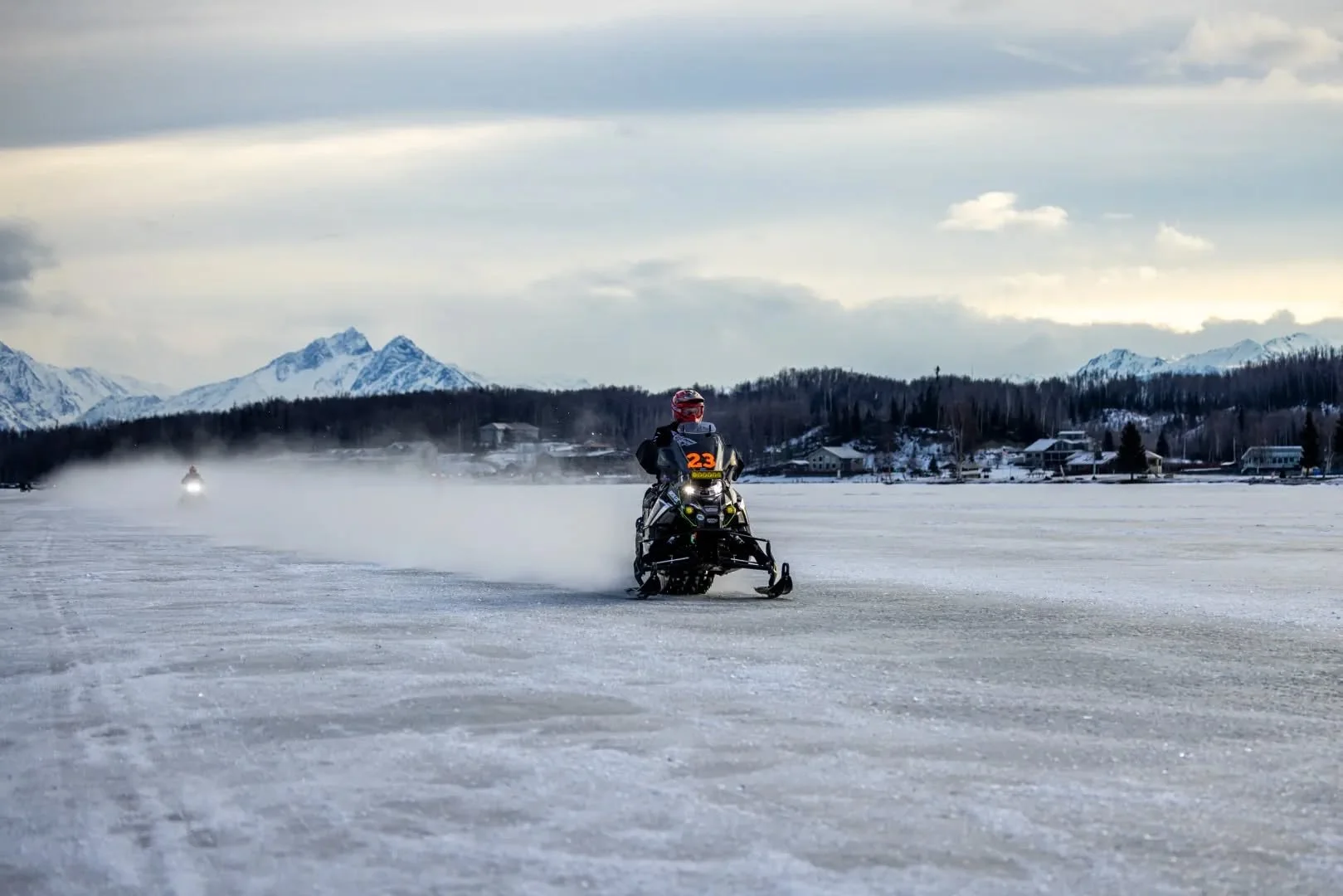
Wyatt J Halek-Hooper at the 2025 start, racing as team 21
Wyatt J. Halek-Hooper brings a different path into the Young Guns group. Raised in northern Minnesota, Hooper entered Iron Dog 2025 with limited Alaska experience but quickly recognized familiar patterns in the cold, terrain, and endurance demands.
“Minnesota has some of the coldest conditions along with Alaska,” Hooper said. “Working outside and being confident in the elements for long periods helps my confidence as a racer.”
After scratching late in the 2025 race, Hooper says the lesson was immediate and lasting.
“I realized how quickly you can throw away this race,” he said. “Going into 2026, we’re running our own race and keeping mistakes to a minimum. You don’t have to be the fastest rider, you just need to run a clean race.”
For Hooper, Iron Dog is about mastering the mental side as much as the physical.
“Racing is a head game,” he said. “If you can conquer that, you’ve got half the game solved.”
For Blake Taylor, 24, Iron Dog is deeply personal. Growing up in McGrath, he watched racers pass his house, stayed up late at checkpoints, and learned mechanics the hard way in his uncle’s garage.
“Being raised in McGrath taught me how to work with what you’ve got and be resourceful,” Taylor said.
This year, Taylor carries added motivation.
“My uncle Therron passed away last March,” he said. “I want to finish strong for him. A finish would mean a lot.”
Colton Sieh, 27, brings a different upbringing to the race. Raised in Kotzebue, he spent his youth hunting and trapping with his father by snowmachine.
“At a young age it became second nature,” Sieh said. “A good race is keeping your rig together and finishing.”
Like many of the young guns, Sieh understands the physical demands.
“Being in fit shape goes a long ways,” he said.
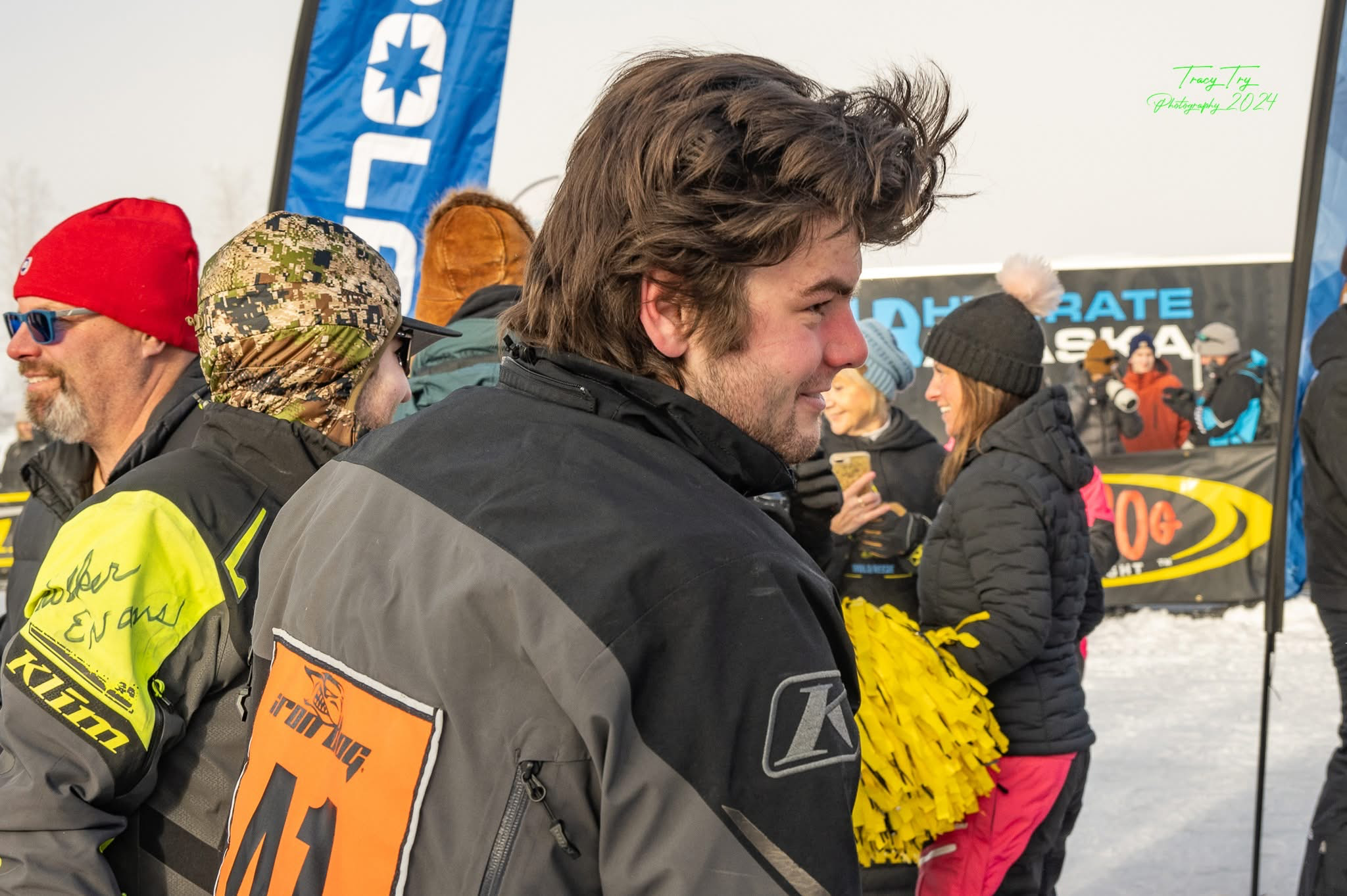
Tyler Reese from Anchorage riding for Team 41
Team 41’s Haakon Wold and Tyler Reese remain among the youngest veterans in the field, having already proven themselves with strong finishes well beyond their years. Alongside them, rookies Kevin McDaniel-Farley, Kenneth Esmailka, Quincy Williamson, and others round out a group defined not by bravado, but by preparation and perspective.
They are not chasing shortcuts or guarantees. They are chasing knowledge, experience, and the chance to earn their place; mile by mile.
As one generation passes wisdom down the trail, the next is already listening.